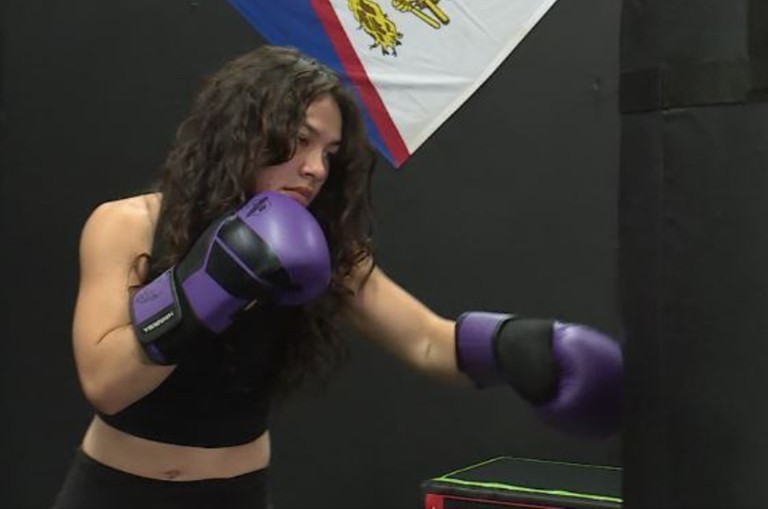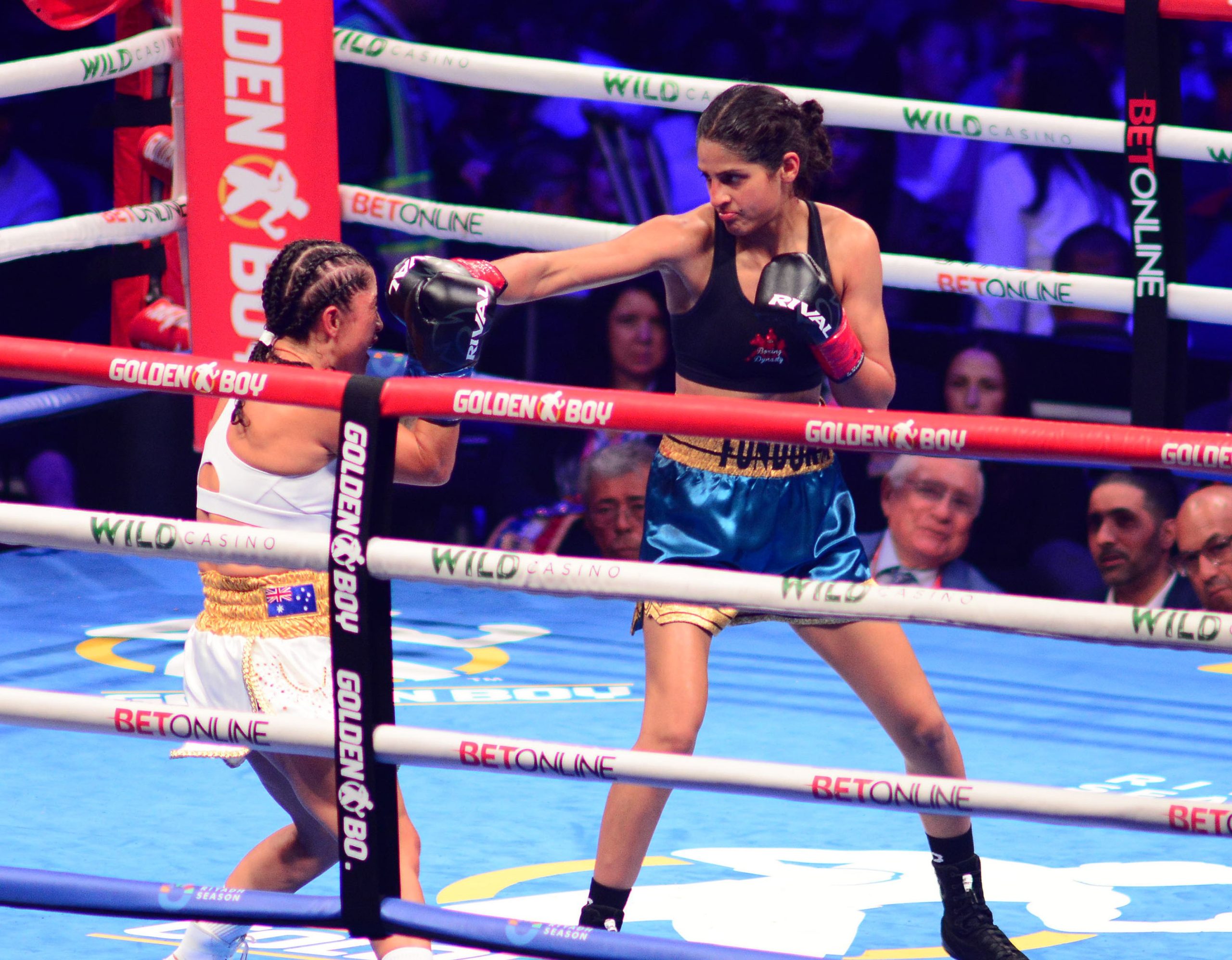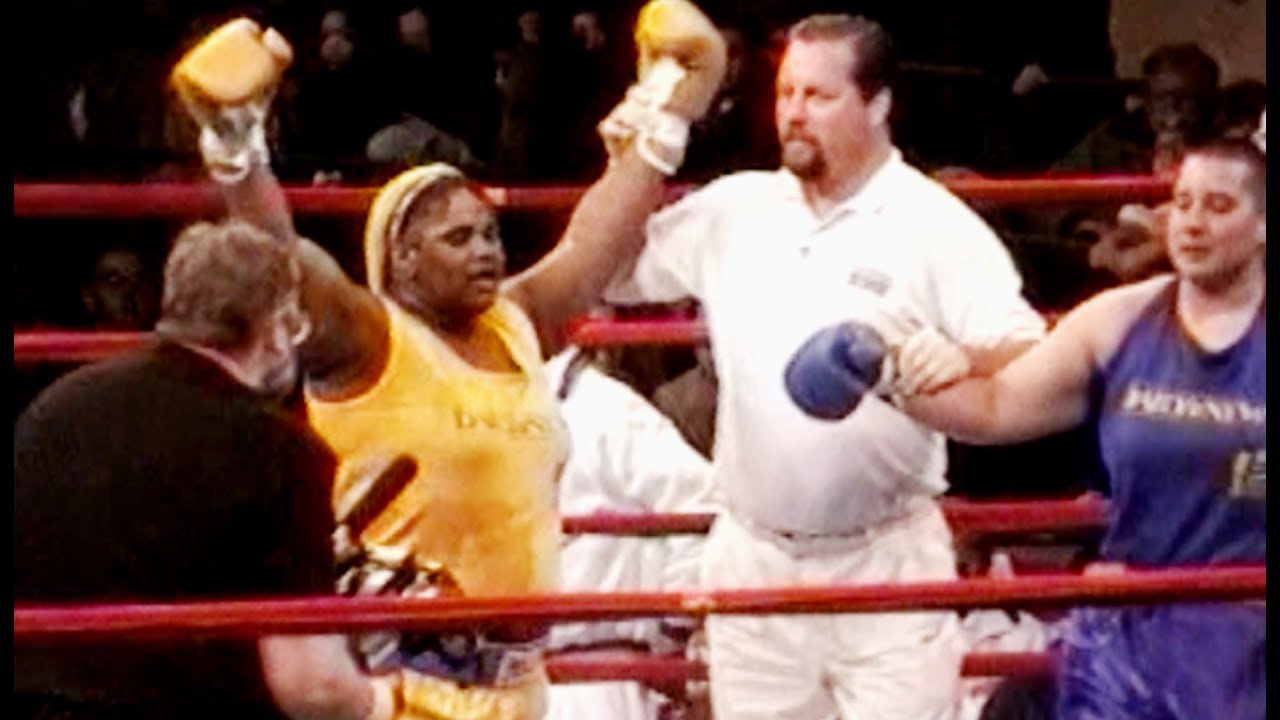


On March 6, 1985, in Las Vegas, a future pioneer of women’s boxing was born. Melinda Cooper, known in the ring as “La Maravilla,” would grow up in the shadow of championship prizefights and neon-lit arenas and eventually become one of the most promising young champions of women’s boxing in the early 2000s.
While today’s generation of female fighters enjoys larger purses, television exposure, and Olympic recognition, Cooper belonged to an earlier era when opportunities were limited and recognition even more so. Yet her career, beginning as a teenage prodigy and culminating in world championship success, helped build the foundation for the sport’s modern growth.
A Determined Beginning
Cooper began boxing in 1996, when she was around eleven years old. Her introduction to the sport came through trainer James Pena, who worked with young fighters at the Nevada Partners gym.
In interviews, Pena has described how Cooper arrived at the gym with a group of boys interested in boxing. According to his recollection, he initially did not realize she was a girl and invited the group to spar. When he later noticed that one of the children was female, he reportedly hesitated and told her he could not allow her to box because she was a girl.
Cooper, according to the story, insisted on trying anyway and reportedly sparred several rounds with the boys, impressing Pena enough to begin training her seriously.
Amateur Success in a Struggling Era for Women’s Boxing
Cooper quickly proved to be a natural in the ring. Over the next several years she developed into one of the most successful amateur female fighters in the United States. She compiled an amateur record of approximately 37 wins and 2 losses, an impressive mark that culminated in her capturing the 2001 Women’s National Golden Gloves title in the junior division at 125 pounds.
It is important to remember that at that time women’s boxing was still fighting for legitimacy. Women’s bouts rarely appeared on major cards, television exposure was scarce, and Olympic boxing for women would not debut until the 2012 Summer Olympics.
For talented fighters like Cooper, the pathway forward was often uncertain.
A Teenager Turns Professional
Ironically, Cooper’s success in the amateur ranks created a new obstacle. According to her trainer, opponents increasingly withdrew from tournaments when they learned they would have to face her. The fact that Cooper had outgrown the amateur scene led her team to pursue an unusual step: turning professional while she was still a teenager.
That decision produced a milestone in Nevada boxing history. On March 23, 2002, at just seventeen years old, Cooper made her professional debut in Las Vegas against Annalisa Middleton, winning a four-round unanimous decision.
More significantly, Cooper became the first female boxer under the age of eighteen to receive a professional license in Nevada, one of the most influential regulatory jurisdictions in boxing. The licensing decision was unusual and drew attention at the time, as teenage professionals were rare, particularly in women’s boxing.
Rising Through the Professional Ranks
Standing about 5 feet 2½ inches tall and fighting primarily in the flyweight and super-bantamweight divisions, Cooper quickly built momentum as a professional. She won her first 21 professional bouts, establishing herself as one of the most promising young fighters in women’s boxing during the early 2000s. For a boxer competing in the lighter weight classes, her record of 11 stoppage victories demonstrated a level of punching power that added to her reputation as a dangerous opponent.
A World Champion at Nineteen
The defining moment of Cooper’s career arrived in early 2005. On January 14, 2005, she faced Anissa Zamarron for the WIBA and IBA flyweight championships. Cooper stopped Zamarron in the ninth round to claim the titles. At just nineteen years old, she had become a world champion, cementing her standing among the sport’s leading contenders.
Life Beyond the Ring
Outside the ring, Cooper’s growing profile occasionally crossed into mainstream entertainment. She appeared in magazines and served as a stunt double for actress Alyssa Diaz in the television series Necessary Roughness. Such appearances reflected a slow but growing cultural recognition of women’s boxing, which would expand significantly in the following decade.
A Hard-Fought Championship Opportunity
In 2011 Cooper faced Ada Velez for the vacant IBF super-bantamweight title. Vélez won the bout by split decision, with two judges scoring the fight 96–94 in her favor and one judge scoring it 96–94 for Cooper. The narrow result sparked debate among fans and observers, some of whom believed Cooper had done enough to win the fight. A rematch later that year ended in another close decision loss for Cooper.
Closing the Chapter
Cooper continued fighting for several more years before quietly concluding her career. Her final bout took place on November 5, 2014, when she defeated Zenny Sotomayor by unanimous decision in Tijuana, Mexico. Her professional record closed at 24 victories, 2 defeats, and 11 knockouts.
From Prizefighter to Public Service
After retiring from boxing, Cooper embarked on a new career. In 2017 she joined the Las Vegas Metropolitan Police Department, transitioning from prizefighting to public service. The discipline, resilience, and physical conditioning required in boxing translated naturally into law enforcement work. Her contributions to the sport were later recognized when she was inducted into the International Women’s Boxing Hall of Fame in 2020, honoring her role as one of the early standouts of women’s professional boxing.
A Pioneer of the Modern Era
Today, women’s boxing enjoys a level of visibility and respect that would have been difficult to imagine when Cooper first stepped into the ring. Female fighters headline arenas, championship bouts appear on major television networks, and Olympic medals are contested by women across the world. Stars such as Katie Taylor, Claressa Shields, Amanda Serrano, and Mikaela Mayer have brought unprecedented attention to the sport.
Their success lies in part on the efforts of earlier fighters who competed during more challenging times. Melinda “La Maravilla” Cooper was one of those pioneers—a teenage prodigy who made history simply by being allowed to fight, a world champion at nineteen, and a member of the generation that helped push women’s boxing toward the recognition it enjoys today.
Wishing Melinda Cooper a very happy birthday from all of us at The Prizefighters. 🥊

Thank you for your support.
You can find us on facebook: ThePrizefighters.com
And on X: @TPF_ib_tv