
Women’s Boxing: A Long Fight for Recognition
Honoring International Women’s Day
Long before sold-out arenas and championship belts unified under bright television lights, women were already stepping through the ropes. They fought in small halls, carnival rings, and overlooked corners of the sport, often with little recognition and even less support. Yet their persistence slowly reshaped boxing’s landscape, round by round.
On International Women’s Day, the story of women’s boxing deserves revisiting as a long, determined climb that continues to gain momentum today.
Early Fighters and Public Curiosity
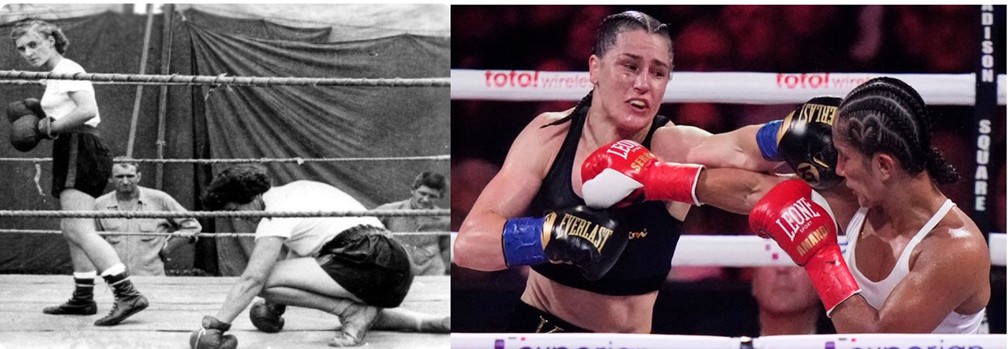
Women’s boxing can be traced back to the eighteenth and nineteenth centuries, when female prizefighters occasionally appeared in exhibitions in England and the United States. These bouts were often promoted more as curiosities than legitimate athletic contests, but they revealed an early truth: women were willing to fight, and audiences were willing to watch.
In the late nineteenth and early twentieth centuries, fighters such as Hattie Leslie and Annie Newton gained notoriety in exhibition circuits. The contests were sometimes staged in music halls or carnival settings, environments that made it difficult for the sport to be taken seriously.
Still, the seeds had been planted. Women were entering the ring and demonstrating that boxing skill was not limited by gender.
The Long Fight for Legitimacy
For much of the twentieth century, however, women’s boxing remained on the margins. Athletic commissions in many places either refused to sanction women’s bouts or simply ignored them. Fighters trained, sparred, and occasionally competed, but meaningful opportunities were scarce.
The modern push for recognition began in the 1970s and 1980s, led by pioneers who insisted that women deserved the same chance to compete as men.
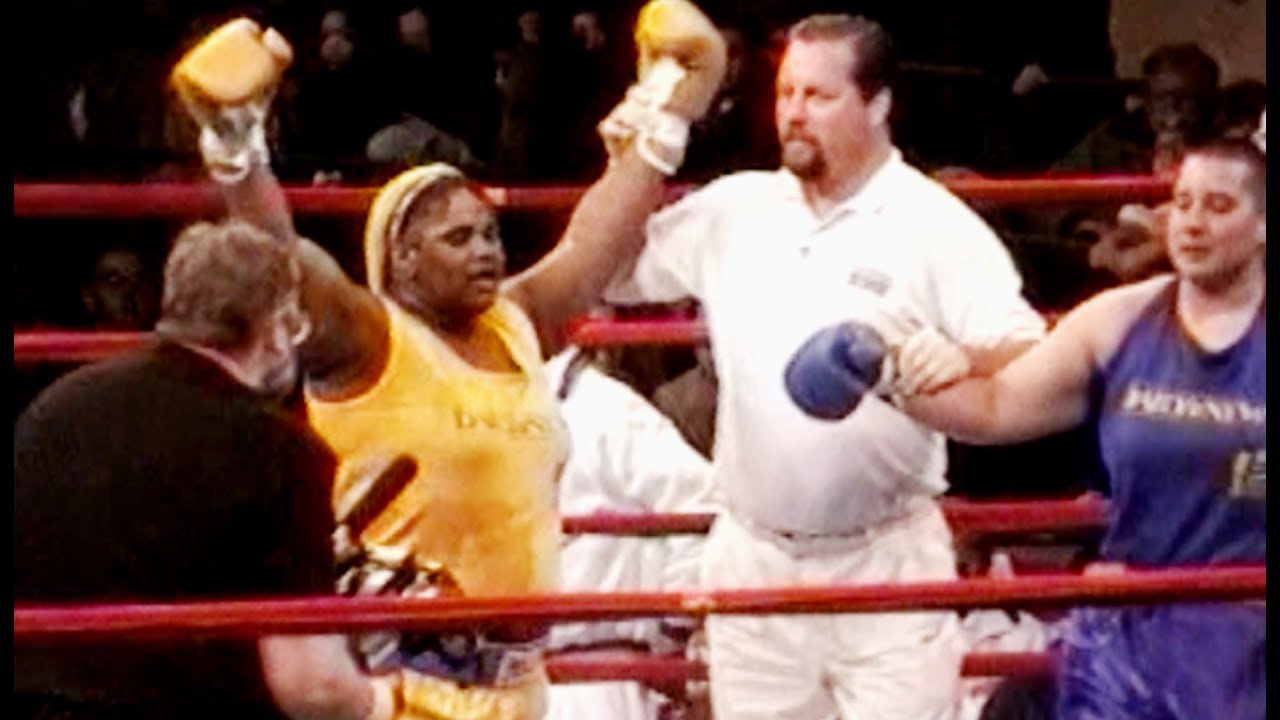
Among the most influential was Christy Martin, whose fights in the 1990s, often televised on major cards promoted by Don King, introduced millions of viewers to the idea that women’s boxing could be both competitive and compelling.
A pivotal moment came on April 16, 1996, when Martin faced Deirdre Gogarty on the undercard of a Mike Tyson fight at Trump Plaza in Atlantic City. Broadcast on HBO, it was among the first widely televised female bouts, giving a national audience a clear view of what women’s boxing could be: fast, aggressive, and technically skilled. Martin’s relentless pressure and Gogarty’s precise counters combined to create a fight that was both competitive and compelling. The bout didn’t just produce a winner in the ring; it delivered a message to promoters, networks, and fans alike: women could headline fights and draw attention on major stages. For Martin, the performance helped cement her status as the sport’s first modern female star, while for the sport itself, it marked a turning point toward recognition, respect, and wider opportunity.
Another central figure was Laila Ali, daughter of Muhammad Ali, whose undefeated career and growing popularity helped bring additional attention to the sport in the early 2000s. Ali’s rivalry with Jacqui Frazier-Lyde, the daughter of Joe Frazier, carried historical symbolism and drew considerable media interest.
Yet perhaps no individual symbolized the sport’s determination more than Lucia Rijker, the Dutch champion whose dominance in both boxing and kickboxing made her one of the most respected female fighters of her era.
These fighters did more than win bouts. They pushed the sport toward legitimacy.
Champions and the Growth of the Sport
As the 2000s progressed, women’s boxing slowly developed a deeper championship structure and a broader international presence.
Fighters such as Ann Wolfe, known for her extraordinary knockout power, and Regina Halmich of Germany, one of Europe’s most successful female champions, helped bring credibility to the sport in different regions of the world.
Later, champions including Holly Holm and Cecilia Braekhus continued pushing the sport forward.
Before she became a household name in mixed martial arts, Holly Holm built a remarkable career in professional boxing. Known as “The Preacher’s Daughter,” Holm competed primarily in the super bantamweight and featherweight divisions, compiling a record of 33 wins, 2 losses, and 3 draws, including 9 knockouts. She won multiple world titles, including the WBA, WBC, and IFBA female bantamweight belts, and successfully defended them several times. Holm was celebrated for her technical precision, crisp counterpunching, and disciplined footwork, which made her a dominant force in women’s boxing during the 2000s. Her success in the ring laid the foundation for her later transition to MMA, where she famously defeated Ronda Rousey in 2015.
Cecilia Braekhus, the Norwegian welterweight, became the first woman to hold all four major world titles simultaneously (WBA, WBC, IBF, and WBO) in 2014, establishing herself as the sport’s first undisputed champion of the modern four-belt era. Her dominance in the ring and consistent defenses helped elevate women’s boxing to new levels of recognition and legitimacy.
Meanwhile, skilled fighters such as Mia St. John, Layla McCarter, and Ana María Torres built loyal fan bases and added depth to women’s championship boxing across multiple weight divisions.
Perhaps the most significant breakthrough for women’s boxing came in the Olympic Games.
The Olympic Breakthrough
In 2012, women’s boxing made its long-awaited debut at the London Olympic Games. The moment represented decades of persistence by athletes and advocates who believed women deserved a place in Olympic boxing. The event quickly justified that belief.
Nicola Adams of Great Britain won the first Olympic gold medal in women’s boxing, becoming an instant national hero. Fighters such as Katie Taylor of Ireland and Claressa Shields of the United States also captured gold medals and emerged as global stars.
The Olympic stage changed the perception of women’s boxing. No longer viewed as a novelty, the sport was now recognized as a legitimate and technically sophisticated discipline. For many young athletes, the Olympic Games became a launching pad for professional careers.
The Fighters Driving Today’s Momentum
Today, women’s boxing is experiencing one of the most dynamic periods in its history. Professional fighters are headlining major events, drawing international audiences, and earning purses that would have been unimaginable a generation ago.
Few moments symbolized this progress more clearly than the 2022 fight between Katie Taylor and Amanda Serrano, which became the first women’s bout to headline Madison Square Garden. The contest was widely praised as one of the greatest fights held in the historic arena and proved that women could command boxing’s biggest stage. Their rivalry has continued to draw global attention and helped elevate the visibility of championship fights in the sport.
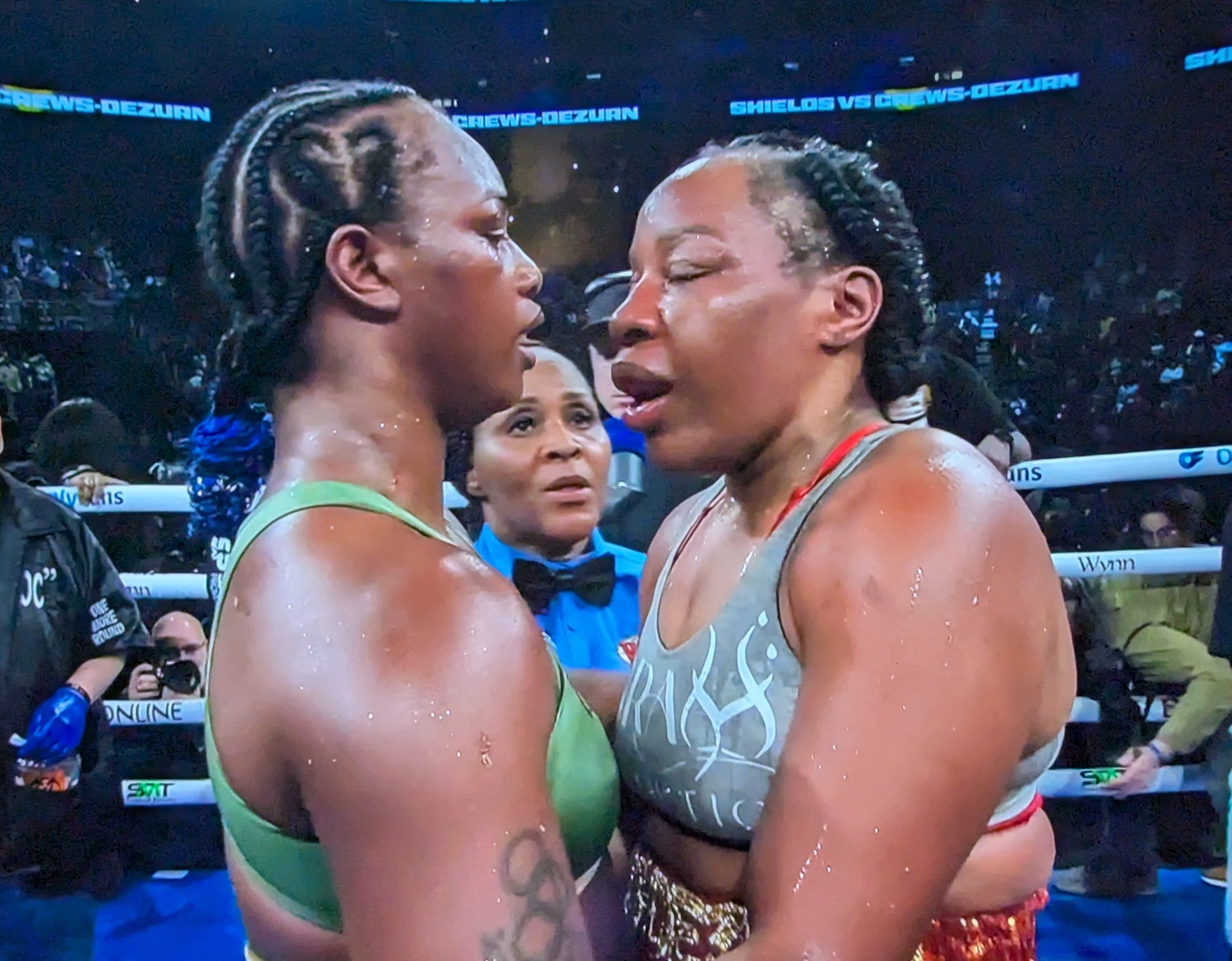
Another central figure in the modern era is Claressa Shields, a two-time Olympic gold medalist who has become one of the most accomplished champions in boxing. Shields became the first boxer, male or female, in the modern four‑belt era to hold undisputed world titles in two different weight classes, first unifying the middleweight division in 2019, then capturing all four major belts again at junior middleweight in 2021.
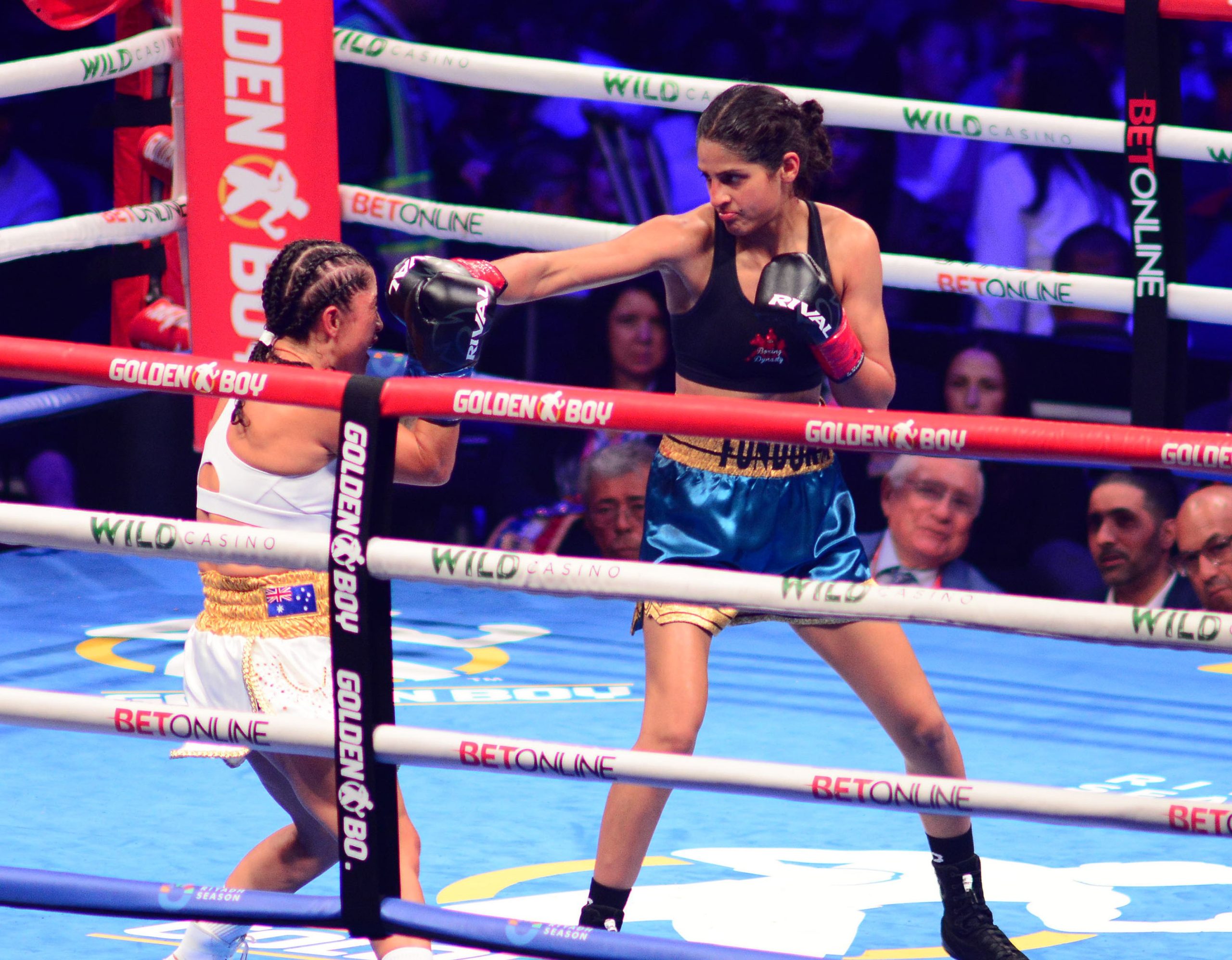
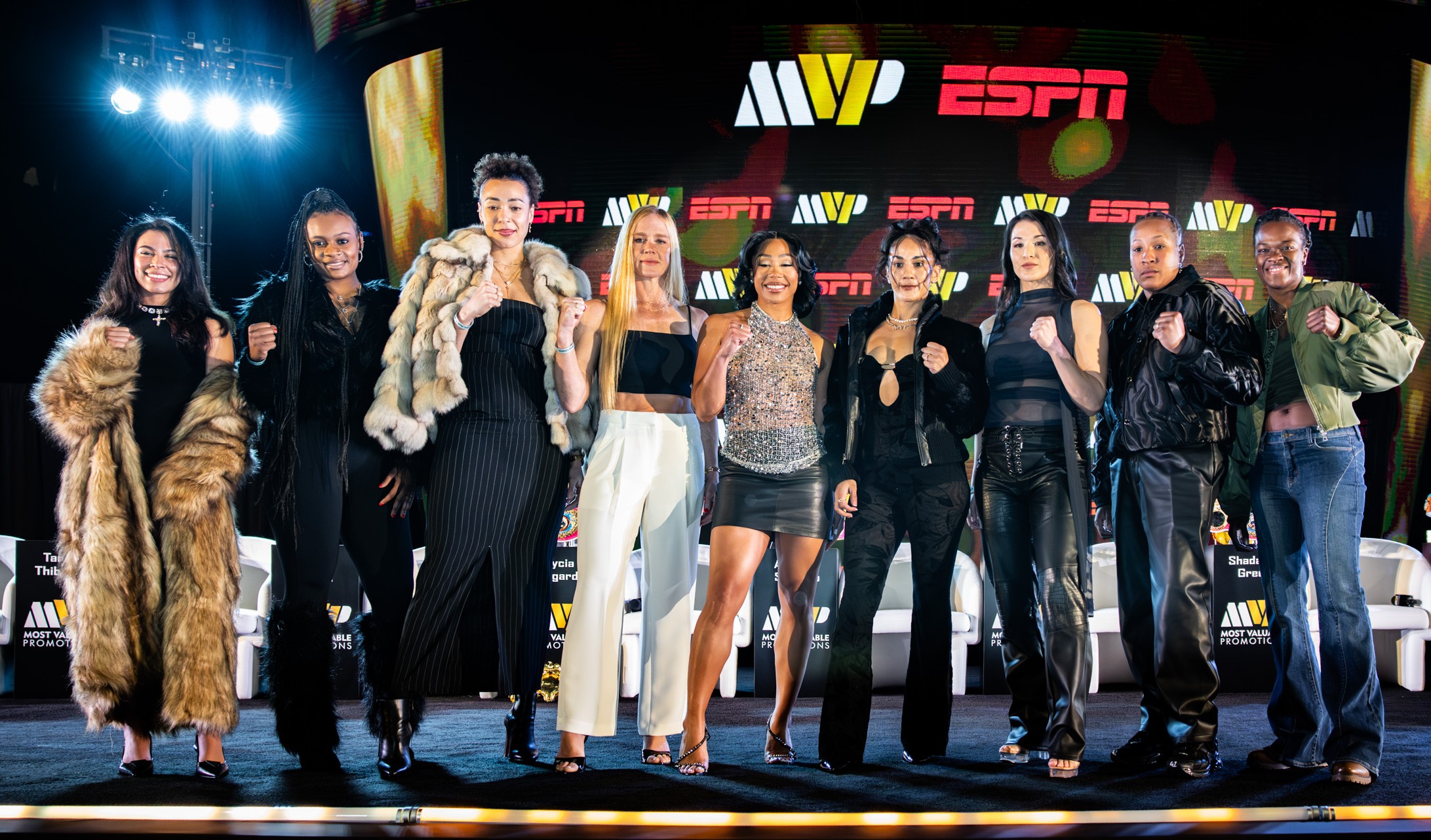
Meanwhile, fighters such as Alycia Baumgardner, Savannah Marshall, Chantelle Cameron, and Ellie Scotney are helping expand the sport’s competitive landscape. Fighters such as Gabriela Fundora, Seniesa Estrada, Mikaela Mayer, Amanda Serrano, Dina Thorslund, Katie Taylor, and many more have added additional depth and star power to the championship ranks.
Promoters and broadcasters have taken notice. Women’s bouts now appear more regularly on major television networks and global streaming platforms. In some cases, entire fight cards have been built around women’s championship contests.
For a sport that once struggled to secure a sanctioned bout, the change is remarkable.
A Story Still Being Written
Women’s boxing has never followed an easy path. The fighters who came before today’s champions often fought without recognition, financial reward, or even official sanction. Yet their persistence laid the foundation for the opportunities that exist today.
International Women’s Day offers an opportunity to recognize that long journey from early exhibitions and small-hall bouts to Olympic gold medals and sold-out arenas.
The pioneers fought for the right to enter the ring. Today’s champions are fighting for equal footing on boxing’s biggest stages.

Thank you for your support.
You can find us on facebook: ThePrizefighters.com
And on X: @TPF_ib_tv